UK Government Announces Major Rail Freight Target
The UK Government has set a new target for freight moved by rail to increase by at least 40% by 2040, measured in net tonne kilometres. The target is intended as a milestone towards an existing ambition of at least 75% rail-freight growth by 2050.
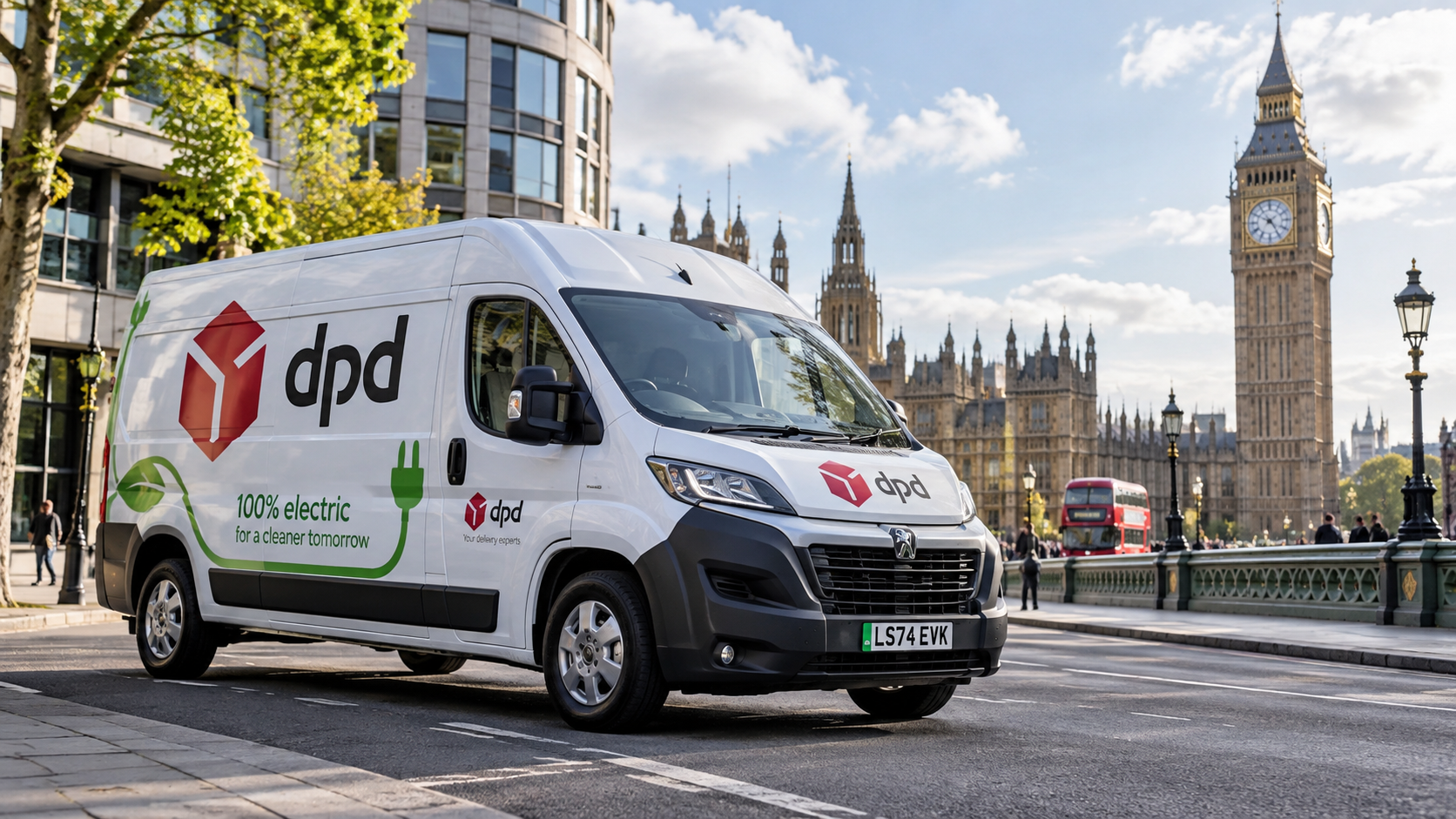
The announcement has important implications far beyond the rail industry. Road haulage, warehousing, courier operations and last-mile delivery all form part of the same national supply chain.
Rather than replacing road transport, greater rail-freight use could change how different transport modes work together.
Why Is the UK Increasing Rail Freight?
The government says the policy is intended to support economic growth, improve supply-chain resilience and reduce the environmental impact of freight transport.
Its 2040 ambitions include a 65% increase in high-value goods moved by rail, 45% growth for construction goods and 7% growth for critical goods. Government estimates suggest achieving the wider target could increase the annual value of goods transported by rail from £33.7 billion to £49.5 billion.
The government also estimates that achieving the target could save around one million tonnes of CO₂ each year compared with moving the equivalent freight by road.
That makes rail freight an increasingly important part of Britain's long-term logistics strategy.
Does More Rail Freight Mean Less Road Transport?
Not necessarily.
One of the most important realities of logistics is that freight trains cannot normally complete an entire door-to-door journey.
Goods must still travel between factories, warehouses, rail terminals, distribution centres, retailers and customers.
That creates what logistics professionals often refer to as first-mile and last-mile movements.
A container may travel hundreds of miles by rail, but a truck or van may still be needed to collect it from the origin and deliver it to the final destination.
As a result, the future is likely to involve more integrated or multimodal logistics rather than competition between rail and road.
Road Couriers Will Remain Essential
Same-day and urgent courier services operate in a very different part of the transport market from bulk rail freight.
When a business urgently needs a document, component, piece of equipment or pallet moved directly from one location to another, road transport offers a level of flexibility that fixed rail networks cannot provide.
Courier vehicles can collect directly from a customer and travel straight to the delivery address without requiring terminals or scheduled freight services.
This flexibility is particularly important for time-critical supply chains.
Rail may increasingly handle suitable long-distance and high-volume freight, while vans and trucks remain essential for collection, final delivery and urgent point-to-point movements.
Opportunities for Multimodal Logistics
A larger rail freight market could create new opportunities for logistics operators.
Distribution centres located close to terminals may become more attractive. Businesses may redesign supply chains to transfer long-distance freight onto trains while using road vehicles for shorter regional movements.
This could encourage investment in freight terminals, warehousing and technology capable of coordinating multiple modes of transport.
For courier and transport companies, the opportunity may lie in providing the flexible road connections that allow these networks to function efficiently.
The result could be a supply chain where large freight volumes travel longer distances by rail before being separated into smaller consignments for road distribution.
Supply Chain Resilience Is Becoming More Important
Recent years have demonstrated how vulnerable supply chains can be to disruption.
Businesses now increasingly consider resilience alongside price when designing transport networks.
Using multiple modes can potentially give companies more options. Rail provides capacity for large volumes over established routes, while road offers flexible coverage across towns, cities and industrial locations.
A stronger freight system therefore depends on different transport methods complementing one another.
Businesses may increasingly need logistics partners that understand not only transport itself but also collection windows, onward distribution, inventory requirements and delivery deadlines.
What This Means for UK Businesses
Companies moving goods around the UK should watch the development of the government's freight policy carefully.
Major infrastructure and policy changes usually take time, but today's targets can shape tomorrow's investment decisions.
Manufacturers and retailers may see new rail-linked distribution options emerge, while logistics providers may identify opportunities around terminals and regional freight hubs.
However, the fundamental requirement will remain the same: goods need to arrive at the right location at the right time.
For urgent or direct movements, reliable road courier services will continue to play an important role.
A More Connected Future for British Freight
The government's 40% rail freight growth target signals a long-term shift towards a more integrated UK transport system.
If successful, more long-distance freight could move by rail while road operators provide the flexible connections needed at each end of the journey.
For the courier and logistics sector, the story is therefore not rail versus road.
It is about building a network where road, rail, warehousing and last-mile delivery work together more efficiently.
And for businesses relying on time-sensitive logistics, dependable courier transport will remain an essential part of that network.

About Us
At Vanguard Couriers we do things differently. We employ real people so there’s always someone at the end of the phone line. We offer a fast, reliable, and trusted same-day service nationwide.